
Villa Lupita: Journeying into rural Costa Rica
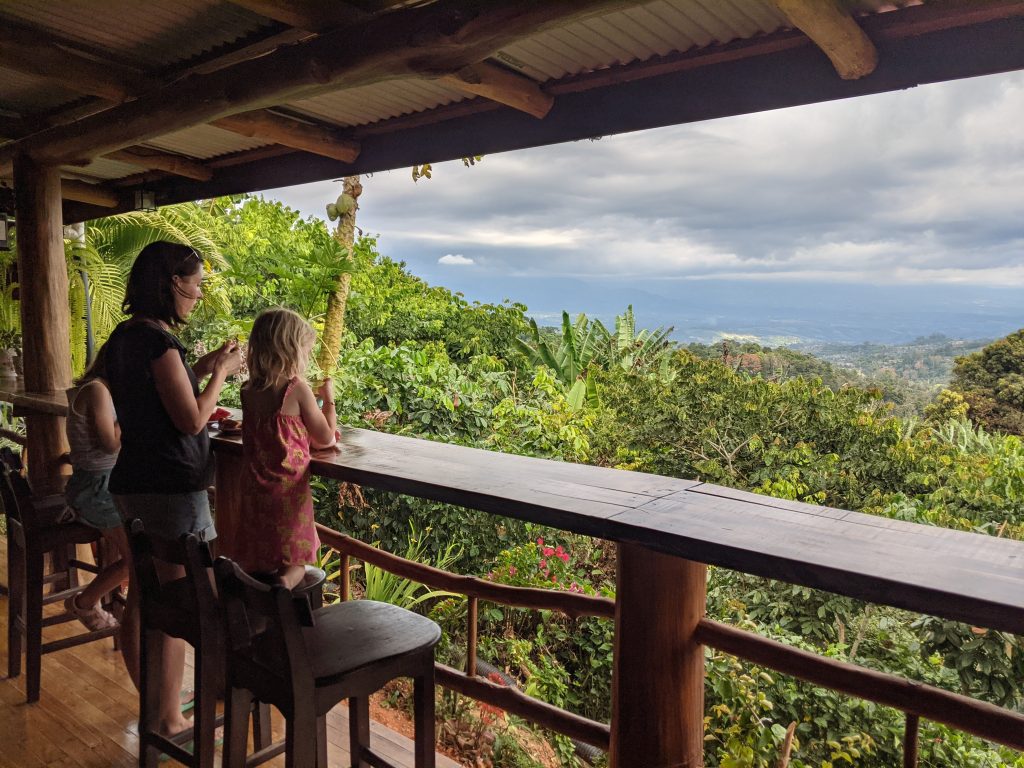
Part way through our stay in Manuel Antonio we needed to look for the next stay on our journey. This was to be the beginning of our long and sometimes frustrating relationship with AirBnB! At this point in time we’ve got into a better routine with this after numerous mistakes and a steep learning curve. First of all, when looking for a place to stay you need to balance multiple factors. It’s very easy to be seduced by the pictures of the most beautiful stay within your price range only to get there and find that you are in the middle of nowhere with little to do and no easy access to food. For us travelling around without a car this point became particularly pertinent. So you need to get a shortlist of stays and then jump back to the map and begin to explore the surrounding infrastructure – what are the roads like, how far to an urban centre, is there a local market, etc. I feel like there is a danger that I’m going to end up writing almost entirely about ‘infrastructure’ of one kind or another but it is the case that it becomes vitally important. It is the structure which supports our lives and our experience of leaving it behind makes you all the more aware of its importance. Similarly, when looking at a stay we realised after a while the kinds of things which are important in terms of that domestic infrastructure and this all has to be taken into consideration – is there an oven, is there a kettle, is there a washing machine – and balanced against the wider infrastructure that relates to the location of the place.
This little pre-amble is really to set the scene for the next chapter of our journey. After what must have been a large number of hours spent on AirBnB (juggled with cooking, cleaning, entertaining, trips to the beach, etc!) we found a beautiful stay in a little place called Concepcion de Daniel Flores. I think that when we looked on the map we made a number of assumptions which turned out to be wrong in the end. We had been thinking of going down towards Uvita on the South coast as we would have been in time to catch the whale migratory season near Marina Ballena. However, the cost of the accommodation there was a little prohibitive and so we found this place which looked like it would be just a short taxi ride (40 mins or so) if we wanted to head down that way and spend a day at the coast. As it turned out the road from our stay to the coast was completely impassable other than in a 4×4 and would have been a much longer drive than we’d thought so in the end we never did go to Uvita.
We had to pack up all of our belongings once again from our stay in Manuel Antonio. We had decided (and have mostly continued) to change our location every week so far. This has both advantages and disadvantages. The best part is that is enables us to see a lot of the country which without a car to drive around is the only way that we can do this. An alternative would be to hire a car, book a long term stay and then drive around. I don’t think that we would enjoy this so much and then you end up in a situation when hiring a car that you either want to ‘make the most of it’ and so end up driving every day or you pay for a car which mostly sits idle. With two young children I think that the latter would more likely be the case for us. We never drove very much in England and wouldn’t want to start now. The major disadvantage for us is the repeat cycle of becoming familiar with the various levels of infrastructure – knowing where are the local shops, what we can cook, bus routes, best spots on the beach, etc. – only to then abandon it all and begin again. The benefits of variety must outweigh those of familiarity for us sufficiently to keep us uprooting ourselves just as we begin to feel settled.
With everything packed up and the apartment returned to its original state we called an Uber. The app told us that the journey (almost 2 hours) would cost ₡30,000 (about £36 at the time) which seemed rather cheap and indeed when the driver arrived he explained that it wasn’t really enough for the drive. We renegotiated and settled to go for ₡50,000 which seemed fair to us as after that 2 hour drive he would also have to drive all the way back to Manuel Antonio with no guarantee of picking up another journey. It was our first really long Uber ride and we discovered that 2 hours is really about the limit for a ‘comfortable’ ride – most of all for Rachael and the girls who are all riding in the back while I’m in the passenger seat generally enjoying practising my Spanish with the driver! The last 20 minutes of the journey took us off of the main roads and we began to climb ever more twisty and bumpier tracks. The final mile of track taking us towards the house was so bumpy and unmade that when we finally arrived and got out of the car we found that the driver had blown one of the front tires!
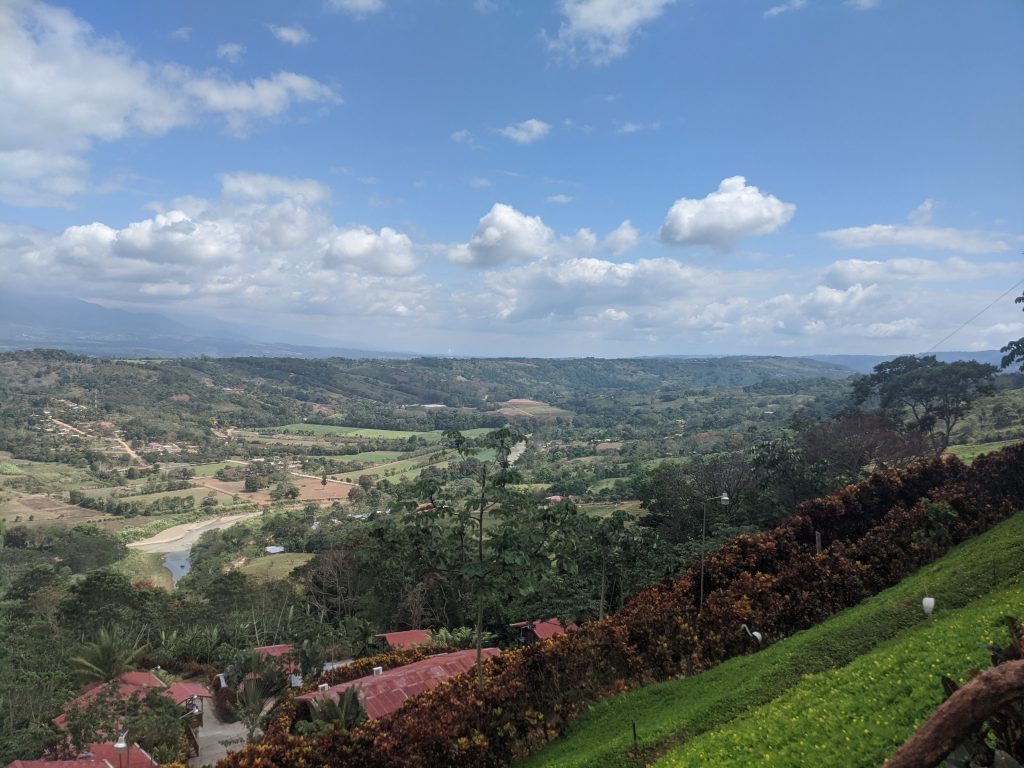
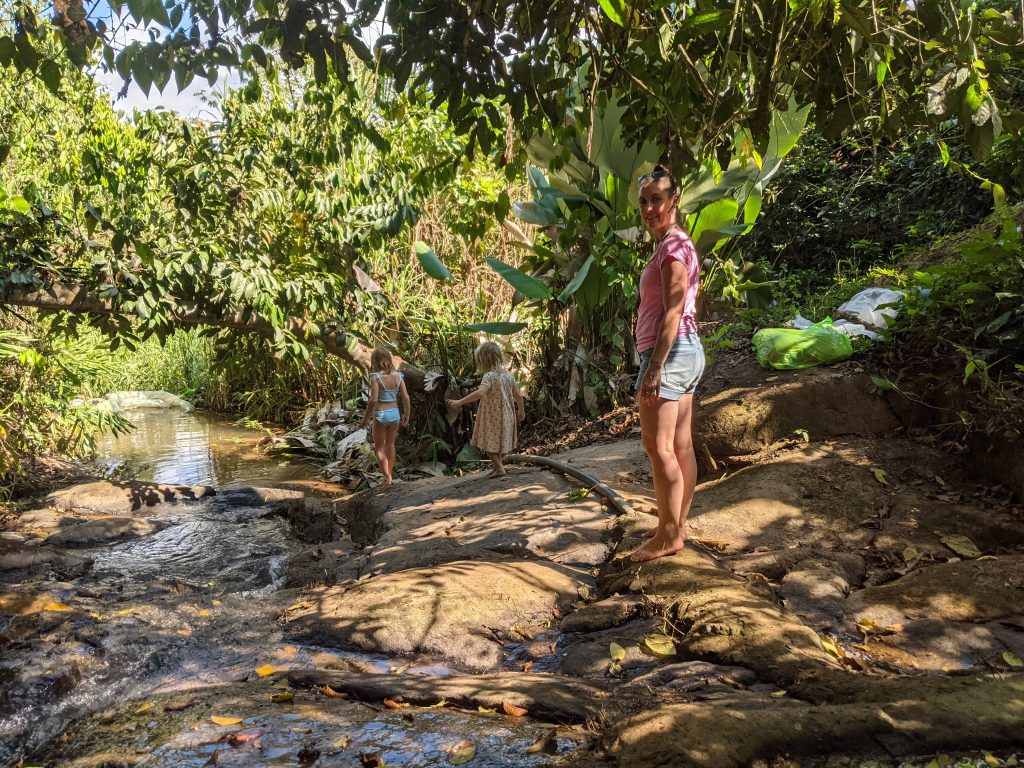
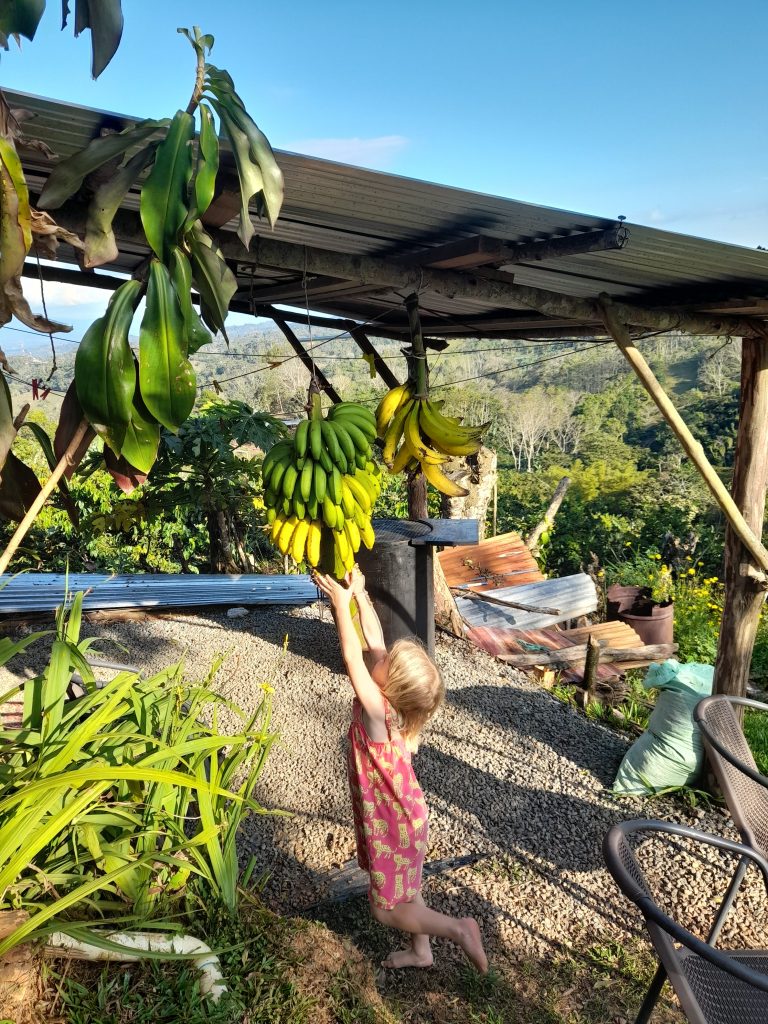
The house that we’d arrived at was called Villa Lupita and remains one of our favourite stays so far. The location was remote but also extremely beautiful. We were met by our hosts Ligia and her son Andres who enthusiastically showed us around the whole property. We were led down to a stream at the bottom of the property where we would end up spending a good part of our time. The first thing really to note here (and perhaps why it remains one of our favourite stays) was simply how welcoming Ligia and Andres were. Partway around our tour Zia slipped on the path and quickly Ligia had her hand and guided her around the rest of the way. It was a very sweet welcome for us to receive and throughout our stay they really couldn’t have done any more for us. There were bunches of plantains and bananas hanging near the back of the house for us which had been harvested from the surrounding gardens and Rosa in particular loved going and collecting them whenever needed.
After what was almost certainly the warmest welcome we’ve received at any stay so far and once we’d been shown where everything was and how it all worked we were left to start settling ourselves. In the final days of our stay in Manuel Antonio we’d been very conscious of trying to avoid carrying lots of food around with us and had very carefully planned out the last few days of meals so that we had used up almost everything we had. In hindsight we can now see that this wasn’t such a great idea! Taking a bag or two from one place to the next really isn’t such a hassle and saves you all arriving hungry and needing to set out and find something to eat.
The area was very remote. There were no sodas or local restaurants anywhere nearby to grab something quick. There was a small shop which we’d been assured stocked everything that you could need. I set off on the walk up and over the rocky roads towards the local shop to stock up on food. I was in for a bit of a shock…
It’s often a bit intimidating to arrive somewhere new and especially when you feel like you stick out like a sore thumb! Our first experience in Manuel Antonio had been that of arriving in an area where there are a lot of tourists but this was an area where we were probably the only tourists and even more so as Costa Rica had only reopened its tourism relatively recently. My Spanish is also pretty good but we were only 2 weeks in at this point and I was still getting my ear in – I find it’s much easier to speak a language than to hear it at first because I can choose to say what I want to say with the words that I know but the other person can then respond with a whole bunch of words that are unfamiliar to me! This was often the case in those early weeks that I’d have my first line all worked out in my head and then be thrown totally off by the response I’d receive.
So I went into what was a very little local shop. There were a couple of locals around and I certainly felt a little conspicuous going in. I was suddenly struck by the almost complete lack of any fresh produce. There was a handful of basics by the front door but by and large there was nothing other than heavily processed food. I think that I went into a bit of a panic. Writing this up now I couldn’t actually remember what I’d bought there but luckily I keep a detailed spreadsheet of our spending so that we can keep a close eye on our budget – the spreadsheet reveals the following as my panic buy: ‘Groceries – butter, sausages, chicken wings, ketchup, juice’. It doesn’t look like a very healthy list! I’d had to ask the lady in the shop if they had any meat and she took me to a chest freezer where they had a selection. I ended up with a bag of breaded chicken wings mainly because I didn’t want to seem rude. The ‘sausages’ as it turned out were a return to the heavily processed hot dog style ones that the kids had taken as the first safe thing they were happy to eat.
I got back to the house with my shopping and Rachael looked aghast at the paltry and unappetising assortment I’d brought home. I was probably still looking a bit shocked. She pointed out to me that I hadn’t really brought home anything that we could make into a meal – what were the girls supposed to eat? We were in a bit of a pickle at this point. Suddenly, by contrast, the supermarkets we’d been going to in Manuel Antonio seemed like the height of luxury, overflowing with abundant fresh produce and bewildering choice! After the event it’s always interesting to observe how your perception changes radically as you compare one situation to another but in the moment it is rarely as interesting.
I think that we managed to bodge together something to eat. The girls both hated the sausages which were not the same ones that they’d been eating before. We ended up feeding them to a local stray dog (the sausages, not the children) who also didn’t come back for any more. As evening drew in we decided that I would have to have another go at the shopping. There was another shop a little further down the road so I’d head off and try that. Maybe it would be better.
I set off again to the next shop only to find when I arrived that there were in fact two more little shops. I went into the furthest one first. I’d been asked to get some marshmallows which I did manage to find but everything else in there was packaged or frozen. I did get some eggs in there too actually which are a staple food throughout Costa Rica and readily available. I asked the guy behind the counter about fresh produce and he suggested trying the one I’d just passed. So I set off for that one and entered into the sleepiest little shop I’ve been into yet. When I describe it as sleepy it wasn’t just that it had a sleepy atmosphere; one of the old women who were behind the counter was fast asleep in her chair! On the plus side this shop was the missing half of the one I’d just been into and they only had vegetables. I went around and collected onions, tomatoes, peppers and a few other items and put them on the counter. The lady behind tallied it all up on her calculator and it came out somewhere around ₡2000. I had a ₡10,000 note but she didn’t have change for that so I started to count out the change that I did have and see what I could get – I think that I had about ₡1500 or so. As I offered to put a few things back she said that it would be fine to come by and pay the rest another time but then I asked if she had any meat which would bring up the bill. She said she had some in the freezer and I ended up with a whole chicken. I don’t know where it was from but I can always get 3 or so meals from a chicken plus stock so it’s a good bet. She added that to the bill and I gave her the ₡10,000 note. The funny part at the end was that my loose change that I’d counted out had remained on the counter throughout and she started counting this out to give to me as my change! Without knowing exactly how I would broach the matter in Spanish and also not wanting to offend (or end up in a pickle) I ignored it and accepted back my own money as my change.
So this time I set off back to the house at least feeling a bit better. I’d had a couple of good interactions at least and that can be as nourishing as the food itself. I was getting some good language practice. I was also learning a lot very quickly about the food system here. I got back to the villa after a walk through the dark over the very bumpy tracks feeling like at least now we could feed the family for a while. We’d managed to navigate the local infrastructure sufficiently to survive for a little while plus we had bunches of bananas and plantain hanging in the garden which would supplement things.
The interesting thing to draw out from the whole experience is the way that the food system is currently designed and how it differs so dramatically from urban centres to rural locations. Food is really very easy to come by if you are in a town or a city. Once you are in the countryside it suddenly seems to be in short supply and I found this in itself really stimulating food for thought. So the thing is that the further you go from an urban centre the lower the footfall coming into your shop. Fresh fruit and vegetables are all perishable items and so they are a bit of a liability from a stock point of view. You really don’t want to spend money on things which if they don’t sell immediately are going to get wasted. Into that space steps processed foods. Frozen, tinned and heavily processed goods will survive for months and months and so it is much easier to stock your little local shop with those instead. The situation we were in now was that we were trying to do our weekly shop from the Costa Rican equivalent of the local corner shop. This pattern is of course global. Urban centres and markets have for hundreds and thousands of years been a safer place to take your goods for sale with a greater population density and thus an increased chance of selling it all. In addition to this there are not only more people but there is more wealth and so you can sell your goods for a higher price. Whilst this is all very interesting it doesn’t stop the fact that when you find yourself in a rural location, where the food is all being produced, you face the huge frustration of not being able to get hold of any of that produce. Even though it has for a long time been the case that the goods flow towards those areas where there are more people I don’t think that it would always have been so pronounced a situation. Local food systems were more intact until quite recently. For me the single biggest change to this has come through the motor vehicle. This allows for a situation to occur which would never have been possible before; that people can live away from an urban centre, not produce any of their own food, have no local food system and yet continue to feed themselves. This was revealed to us because we’re moving without a car and so where someone else travelling might just jump in the car and drive 20 minutes to the local Walmart, fill their boot and head back home, we were unable to do so. The car and the supermarket have almost co-evolved their own ecosystem. They are two halves of a system which are totally interdependent: without cars (and of course lorries to transport goods to them) supermarkets would be without consumers.
I think that the big difference that this has made at the local level is to the items that are stocked by those small shops. In the past at least the local population would have been buying from those shops and so the footfall would have been greater plus more of the wealth in that area would be recirculated in the local economy. Aside from the local shop there would also have been other kinds of decentralised local food networks which I suspect are actually still alive but very well hidden and especially to the eyes of an outsider.
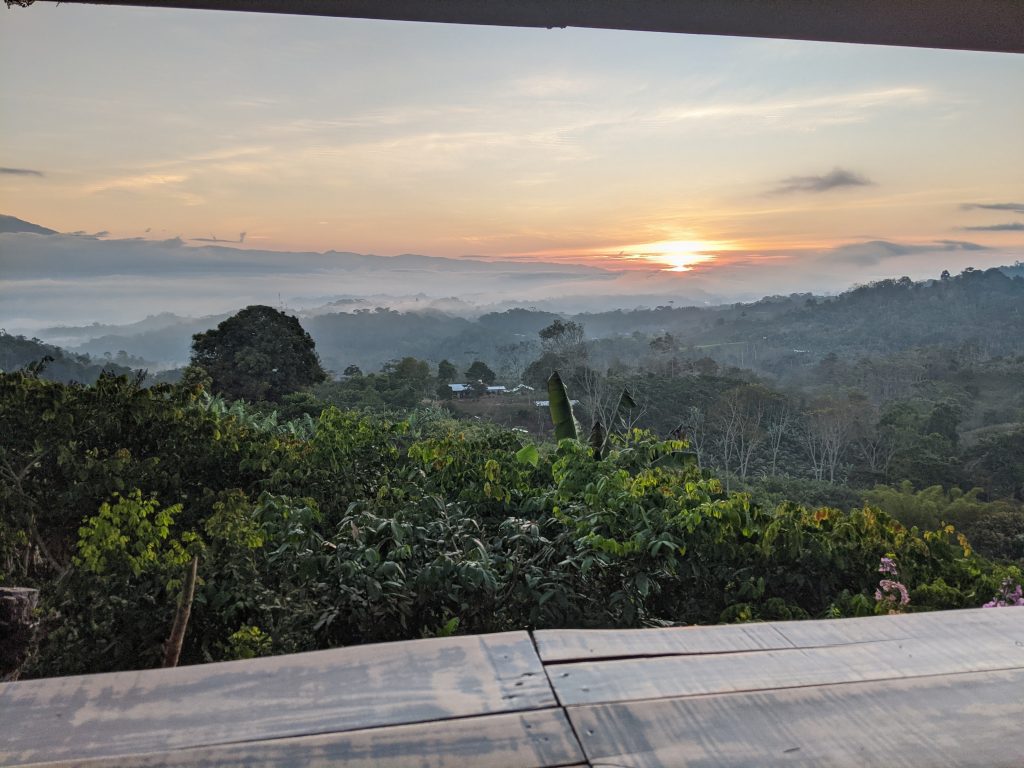
I’d like to finish up with a counterpoint to the picture I’ve painted, a picture of a rather impoverished food system. Rachael has been reminding me from time to time not to make our stay here in Costa Rica seem too bleak! It definitely isn’t bleak at all. The country is rich, diverse and incredibly friendly and welcoming. However, there are plenty of people writing about all of that. There are also probably not so many people who are going to view the place through the particular lens that both Rachael and I see things with a special interest in the interactions between food, culture, people and place. So inevitably we’re going to write something different and also a true account of our experience here – not just the glossy edited version. We have found food to be an area full of challenges and also incredibly interesting to observe and analyse.
My parting sentiment is to say that this also marked a turning point in our experiences with food here in Costa Rica. We were just about to start making some very exciting discoveries…
3 Comments
Love your blog! Very interesting. Thanks for sharing your experiences.
Love,
Mieneke
Thanks Mieneke! Glad to hear that you are enjoying it!!
Hope that you are all keeping well too.
Love, Ross, Rachael, Zia & Rosa